
Start by stopping repeated attempts
If your garage door lifts only a short distance after a loud bang, stop pressing the remote. Springs counterbalance the weight of the door. The opener assists movement; it should not be asked to lift an unsupported door. Our spring repair page explains why the assessment includes the connected lifting hardware.
A heavy or stalled door can have more than one cause. The goal is to describe what you can safely observe, not to diagnose a spring by forcing a manual lift.
What you can see from the floor
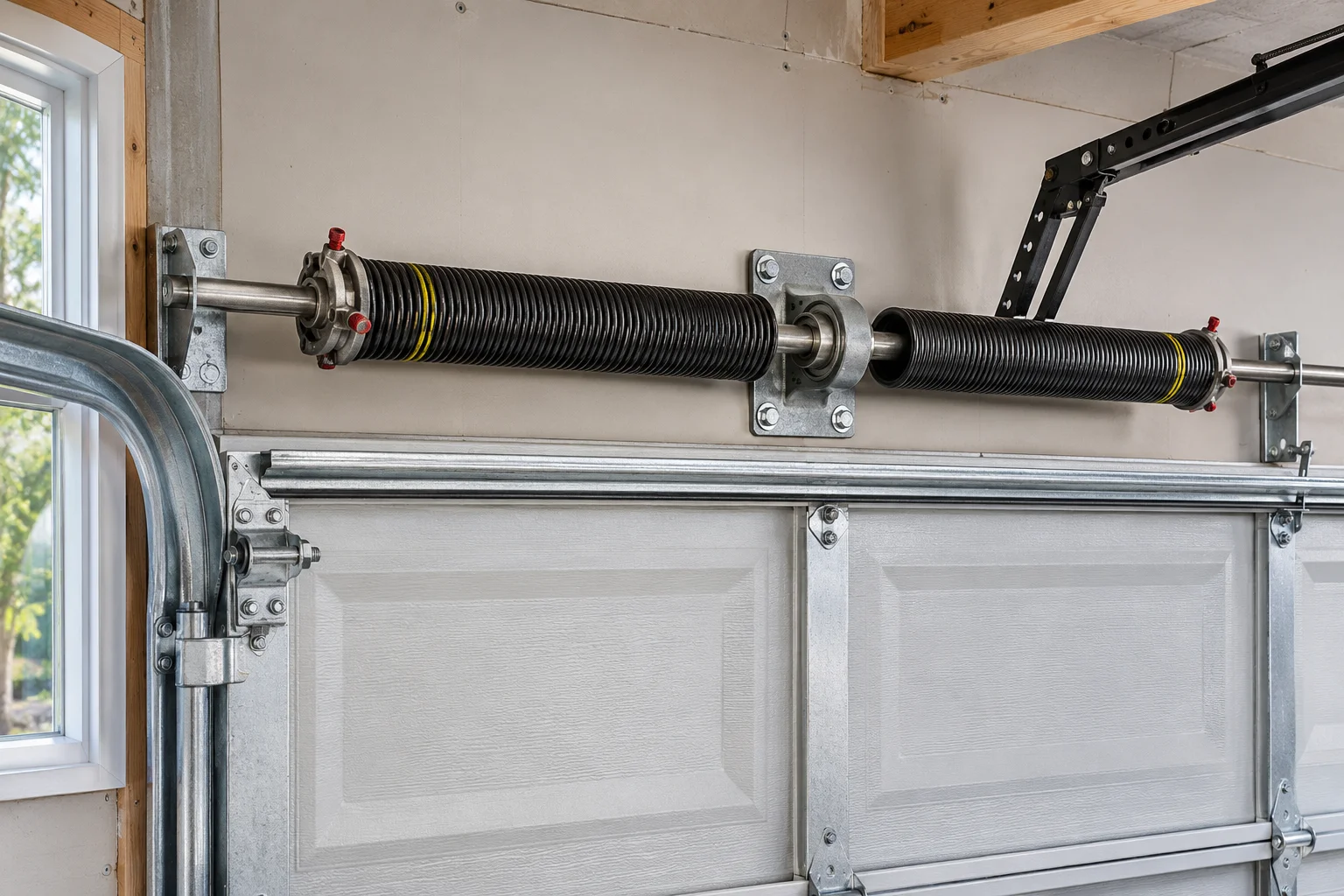
An overhead torsion coil may show a separation after breaking. A side-mounted extension arrangement looks different. Cables can become slack or uneven if the door is no longer balanced. Do not touch the assembly to find out which part is loaded.
| Observation | What to tell the call contact |
|---|---|
| Bang followed by no movement | When it happened and the door position |
| Visible gap in a coil | Where it is, without climbing for a photo |
| Door lifts crookedly | Stop use and describe the uneven side |
| Motor clicks but nothing moves | Whether the wall control behaves differently |
| Cable hanging loose | Keep the opening clear and mention it |
Motor symptoms do not prove motor failure
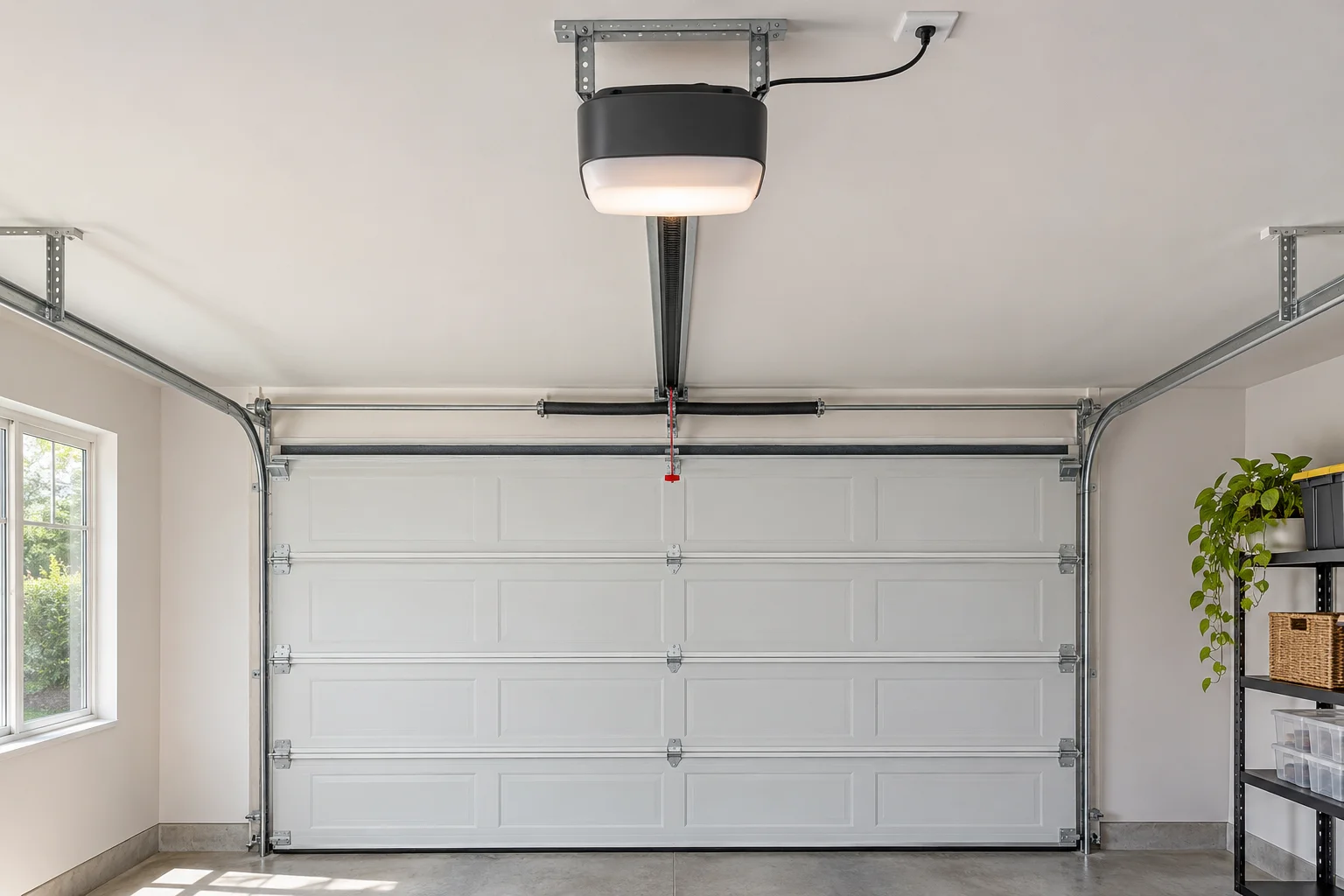
A strain or hum can reflect a door that is too heavy or mechanically jammed. Increasing force or repeatedly resetting controls can add damage. A proper opener assessment checks the mechanical door as well as power, wiring and drive parts.
If only a remote fails while the wall control works normally and the door travels smoothly, the control path may be the starting point. That still does not justify bypassing safety systems or taking covers off energized equipment.
Spring selection is specific to the assembly
Replacement springs must match the door’s actual requirements. Size and appearance are not enough, and a previous installation may have been mismatched. Ask how weight, balance and the system arrangement are verified.
The inspection should consider drums, bearings, cables and anchors, along with the springs. A visible broken coil may be the main fault, but connected wear can affect the safe return to use.
Keep hands away from stored-energy parts
Do not loosen winding cones, remove bottom brackets, disconnect lifting cables or use improvised bars. Do not pull a release beneath a raised or unstable door. These tasks can release substantial force and are not homeowner troubleshooting steps.
In Hutto and Pflugerville, share the listed ZIP and whether you have another safe entrance. A trapped vehicle is useful context, but it does not make an improvised lift safe.
Ask what testing follows
After the correct repair, ask how balance and travel were checked before the opener was reconnected. Review the exact manufacturer’s safety instructions. Keep the model information and work description so a future fault can be compared with the actual system rather than a vague recollection of which spring was changed.
Primary technical reading
The DASMA safety library explains garage-door system precautions. Its technical data sheets support product and installation questions. These general references do not replace the exact door and operator manufacturer’s instructions. For a local request, confirm your ZIP in our service-area directory, then describe the symptom and safe access by phone.