
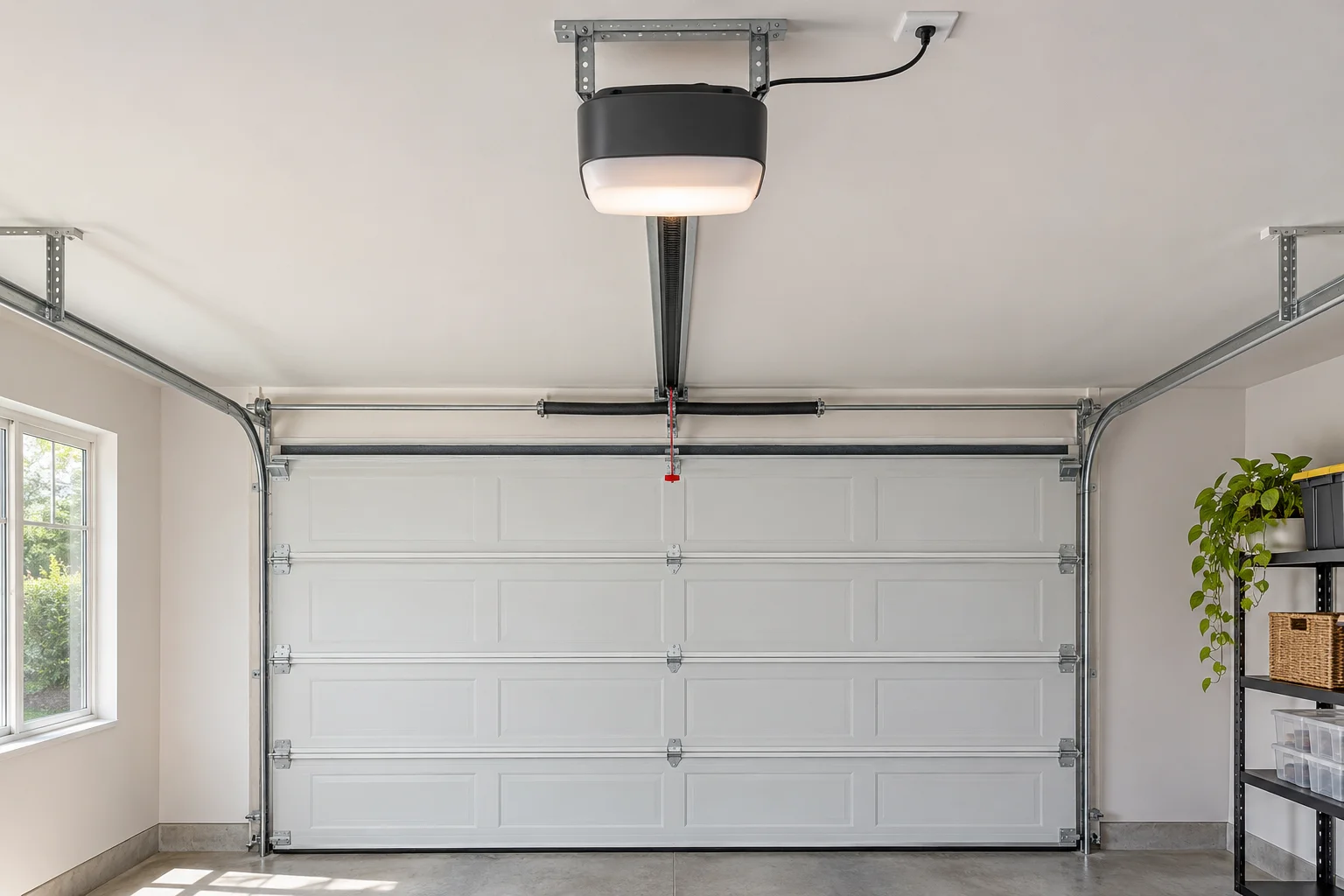
First verify the door
An opener comparison should begin with balance and smooth mechanical travel. A stronger motor does not repair a damaged door, and a quiet drive cannot eliminate all noise from worn rollers or a loose mounting surface. Our opener installation page explains the compatibility check.
If the existing operator has a single fault, consider whether repair is sensible before treating every new feature as a reason to replace it.
Compare three arrangements
| Arrangement | Practical consideration |
|---|---|
| Belt drive | Often selected where drive noise matters near living space |
| Chain drive | Suitability depends on the chosen model and door requirements |
| Wall-mounted | Requires compatible torsion hardware and side clearance |
None is universal. The selected model’s limits, the actual door weight and the mounting conditions determine fit. Ask the installer to explain why the proposed system works in your garage.
Follow the noise path
In an attached garage, vibration can travel through ceiling mounts into a room above or beside it. A rumble that follows each section around the track curve may involve rollers or hinges instead of the operator drive. Explain where the sound is strongest and whether it happens opening, closing or both.
Cedar Park requests include these attached-garage considerations. A quiet replacement can disappoint if the door itself continues to bind or shake.
Check the ceiling before choosing the cleanest look
A wall-mounted unit can free the center of the ceiling, but it needs the right shaft arrangement, space beside the opening and suitable power. Storage racks and lighting also need to remain accessible. Our clearance guide helps prepare the conversation without replacing an installer’s survey.
A ceiling-mounted rail needs adequate backroom and secure structural support. The fact that the old rail fits does not establish that every replacement model uses the same dimensions.
Decide how people will use it
List wall controls, remotes, keypads and app access. Old accessories may not transfer to a new system. Ask how access can be removed if a remote is lost and how household users will operate the door if the network is unavailable.
Battery backup is model-specific and separate from smart control. If the garage lacks a secondary entrance, discuss safe outage access before selecting equipment. Read the emergency release instructions while the door is safe; never experiment with a raised or unbalanced door.
Safety is part of the installation
Photo-eyes, travel limits and reversal functions must work together. Ask how they were tested using the manufacturer’s procedure. Keep remotes away from children and review control placement.
For Kyle or Austin, use the exact ZIP list to qualify a request. Calls may be made 24/7; scheduling and the supported scope are confirmed separately. Keep the product manual and model identifier so future maintenance begins with the correct information.
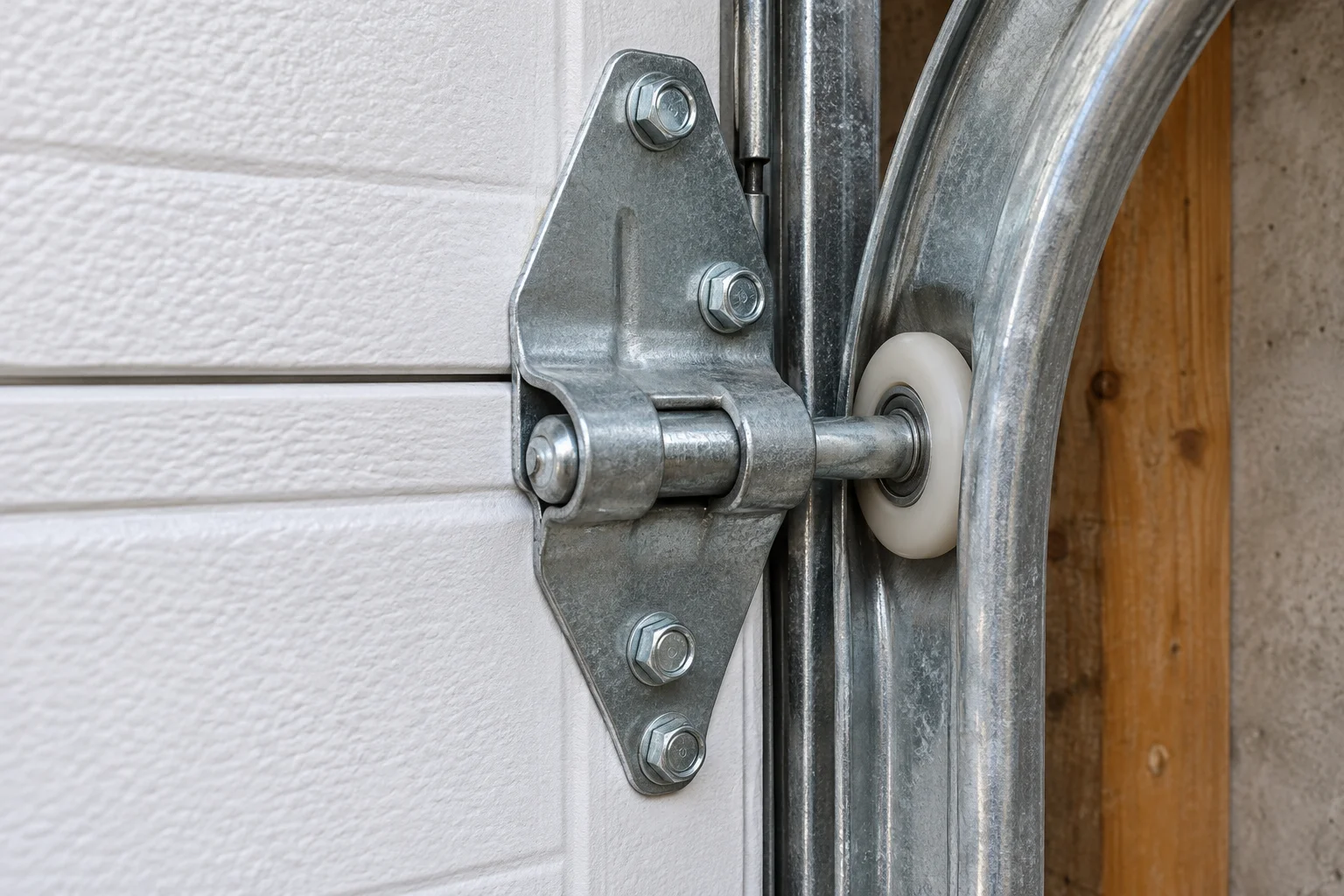
Primary technical reading
The DASMA safety library explains garage-door system precautions. Its technical data sheets support product and installation questions. These general references do not replace the exact door and operator manufacturer’s instructions. For a local request, confirm your ZIP in our service-area directory, then describe the symptom and safe access by phone.