
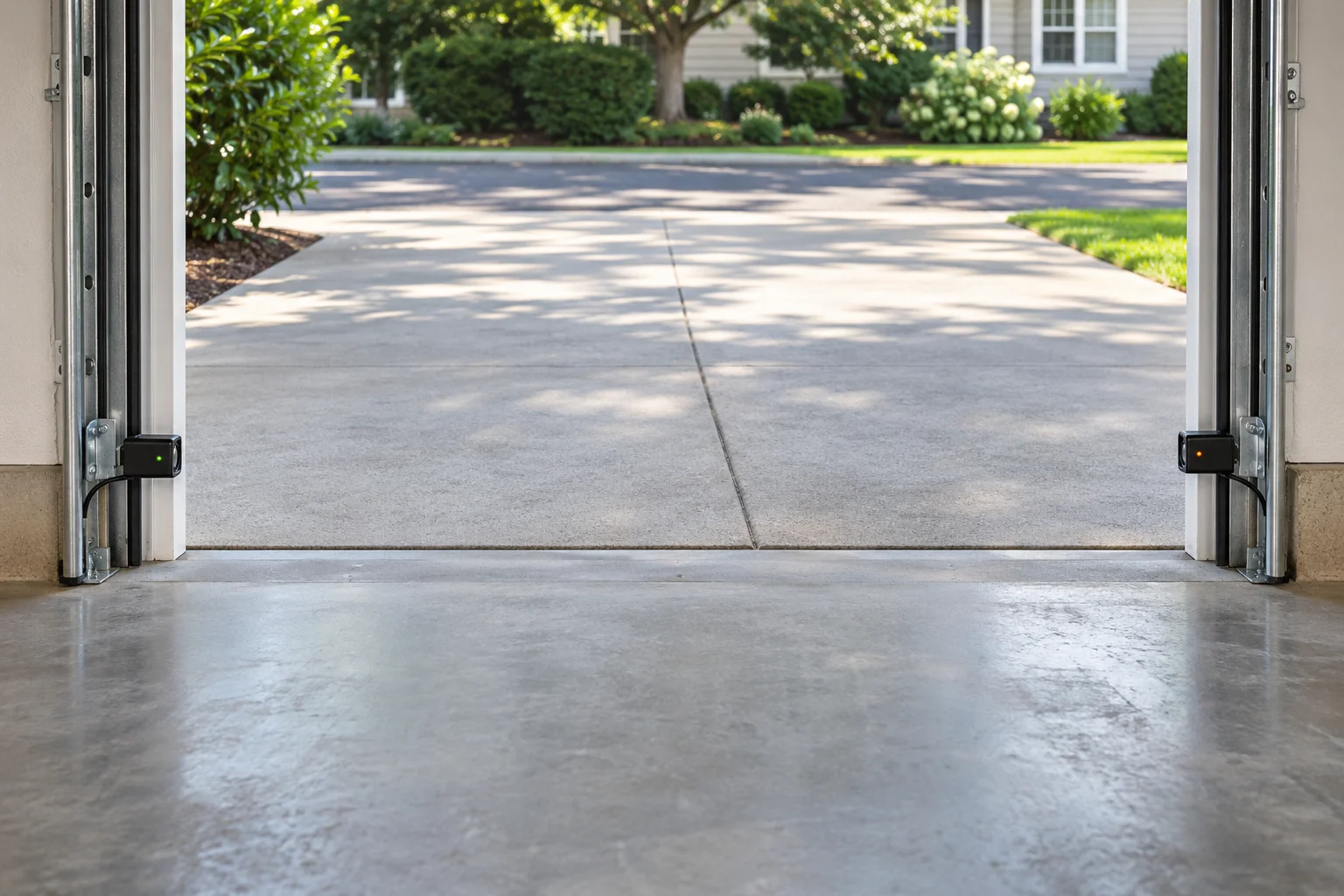
A time-of-day pattern is useful evidence
If a garage door reverses during closing only at certain times, tell the service contact the time and what the sensor lights show. Strong sunlight can be one factor, but obstruction, alignment and wiring can produce similar symptoms. Our safety sensor repair page explains why the exact opener model matters.
Do not assume the weather is the cause simply because the garage faces west. A repeated pattern helps an inspection; it is not permission to bypass the safety beam.
Observe from outside the path
With the door still, look for a leaf, bin or object between the sensor faces. Note visible dirt or a knocked bracket without moving hardware or touching wiring. The meaning of a steady or flashing indicator depends on the manufacturer and model.
| Observation | Record for the technician |
|---|---|
| Only one time of day | Approximate time and direction of light |
| One sensor indicator changes | Which side and the pattern |
| Door reverses before reaching the floor | Point in travel and any visible obstruction |
| Wall control behaves differently | Exact behavior without repeated tests |
| Recent impact near a sensor | When it occurred and visible bracket position |
Avoid defeating the system
Taping, relocating or electrically bypassing eyes can remove a protection intended to detect an obstruction. Holding a wall control to close a door may be a manufacturer-specific diagnostic behavior; it is not a permanent repair or proof that the automatic system is safe.
Do not increase closing force to push through a fault. A closing problem can also involve mechanical resistance, poor travel adjustment or a binding door. Those conditions need different remedies.
Match the fix to the model
A technician should distinguish sensor alignment, mounting stability, wiring damage and component compatibility. If sunlight is genuinely involved, any shield or placement change should follow the manufacturer’s approved guidance while retaining correct detection across the opening.
Replacement eyes are not interchangeable simply because their wires fit. Ask which compatible parts are proposed and how the final photo-eye and reversal functions will be checked.
Look at the whole opening
A door that shakes, leans or scrapes deserves a mechanical assessment as well. If cables are slack or a panel folds, stop use rather than treating the issue as a beam problem. Our off-track repair page and opener repair page describe related faults.
Pflugerville and Round Rock pages have useful symptom preparation for their listed ZIPs. Coverage follows those postal lists, not the direction in which the garage faces.
Keep a small record
A safe photograph of the indicators, the model label and a note about the time can reduce guesswork during the call. Follow the exact operator manual for routine safety testing once the fault is resolved. If a test fails, stop automatic use until the system has been assessed.
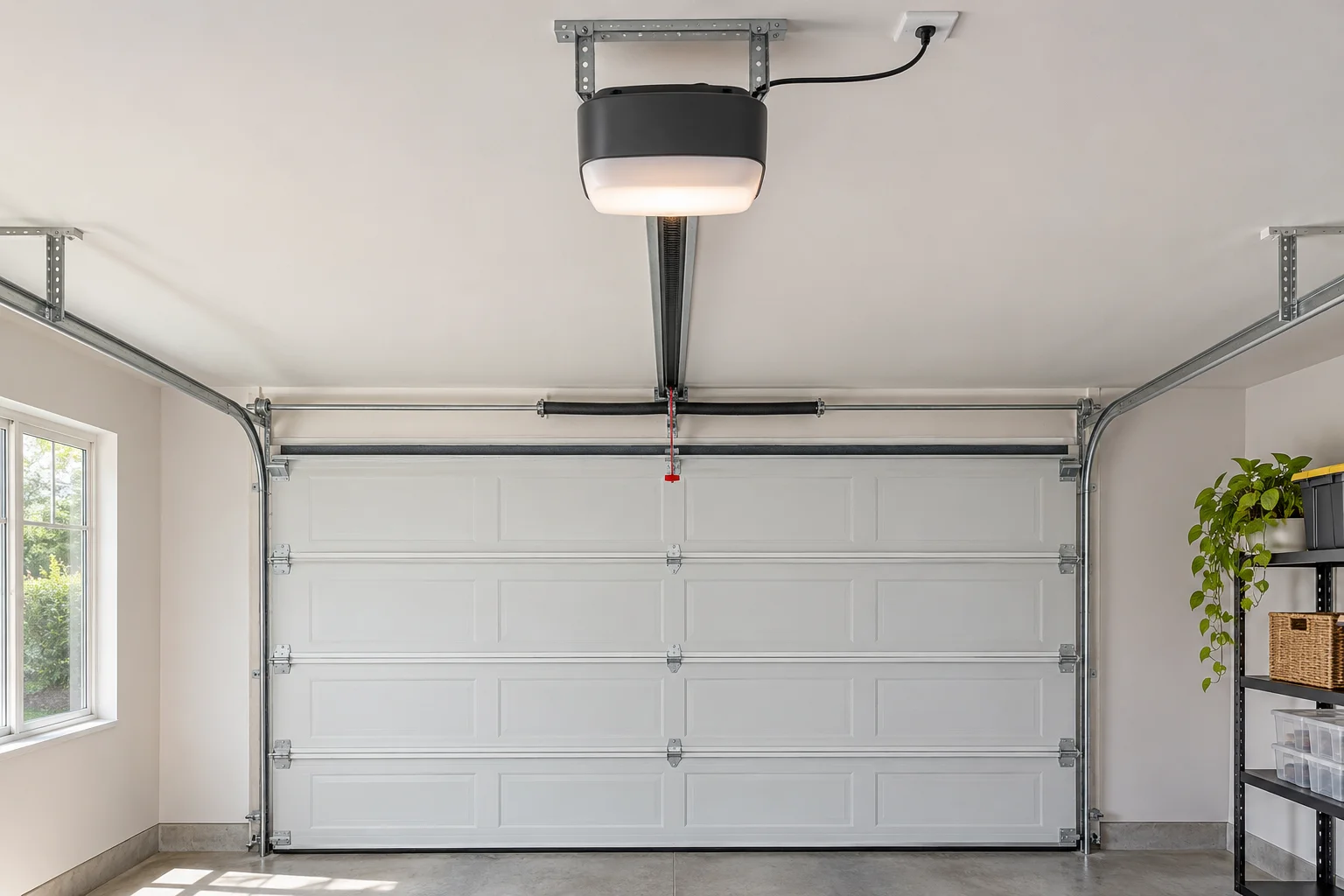
Primary technical reading
The DASMA safety library explains garage-door system precautions. Its technical data sheets support product and installation questions. These general references do not replace the exact door and operator manufacturer’s instructions. For a local request, confirm your ZIP in our service-area directory, then describe the symptom and safe access by phone.