Start with what the door is doing
A door that reverses while closing or only closes with continuous wall-control pressure may have a sensor obstruction, alignment problem or wiring fault. Error patterns differ by opener model. For safety sensor repair in Austin, a useful first call describes the position of the door, the sound you heard and whether the problem began suddenly or developed over time. You do not need to name the broken component before asking for help.
What a careful assessment considers
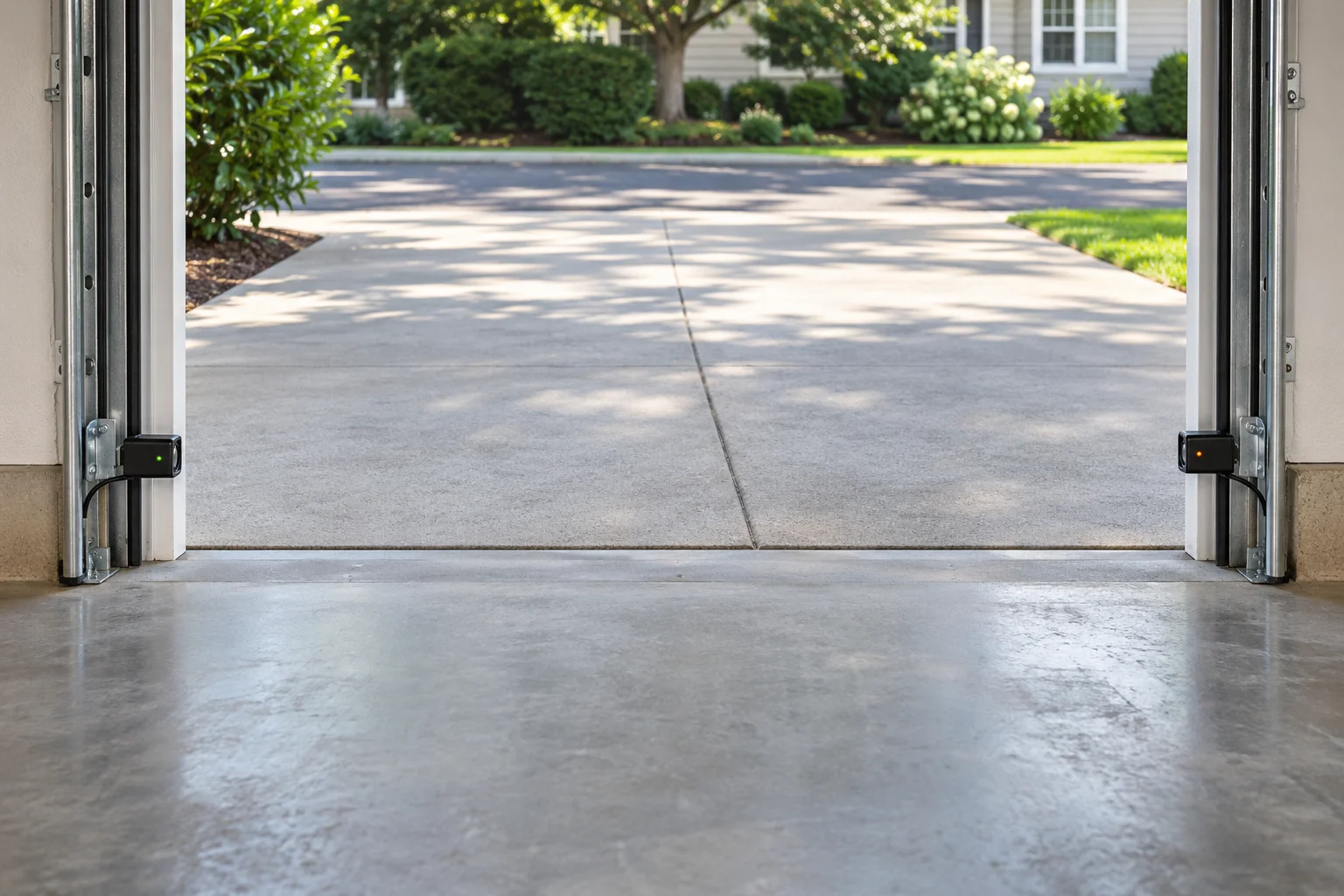
Look from a safe position for a bin, leaf or object blocking the beam. Inspect for obvious lens dirt without moving brackets or touching wiring. Note the indicator lights for the technician.
The repair should distinguish alignment, damaged wiring, mounting problems and incompatible components. Reversal and photo-eye function need to be tested using the selected manufacturer’s procedure. Request an explanation of the underlying cause and which parts are included in the proposed work. A symptom can involve several connected components; a clear scope avoids treating each visible issue as an unrelated repair.
Helpful details to have ready
| Observation | Why it matters |
|---|---|
| Fully closed, partly open or stuck raised | Changes the immediate safety and access discussion |
| One door or two, approximate opening size | Helps identify the type of system involved |
| Model label and visible error lights | Helps qualify compatible controls or parts |
| Recent impact, power outage or unusual sound | Gives the assessment a starting point |
| ZIP and safe access to the garage | Confirms the listed coverage and approach |
You can gather these details from the floor with the door still. Do not climb into tracks, remove covers or stand beneath a questionable door to get a clearer photograph.
What you can safely do while waiting
Never tape over, bypass or relocate safety eyes to defeat the beam. Do not assume the door is safe because the remote starts working once. In Central Texas, strong sunlight and heat can change what you notice at the garage. Record the time of a sensor-related reversal, but do not assume weather is the diagnosis or defeat a safety control. Keep children, pets and vehicles outside the door’s path. If the overhead door is your only entrance, explain that during the call rather than attempting to force access.
After the work: understand the handover
Ask how the repaired system was checked, which parts were retained and what maintenance the manufacturer recommends. A residential automatic door needs its safety devices working together. Review the emergency release instructions for the exact model, and use them only under safe conditions specified by the manufacturer.
For connected symptoms, read our spring repair guide, opener repair information and maintenance overview. The homeowner guides explain the decisions in more detail.
Coverage and next steps
Our service-area directory lists the eligible postal ZIPs. A county or city name does not imply complete coverage. Calls and repair requests may be made 24/7; scheduling, availability and the appropriate service scope are confirmed by phone. A request is not a confirmed appointment or dispatch.
For technical background, see DASMA’s garage-door safety guidance and manufacturer-focused technical data sheets. Product instructions take precedence over general advice.